
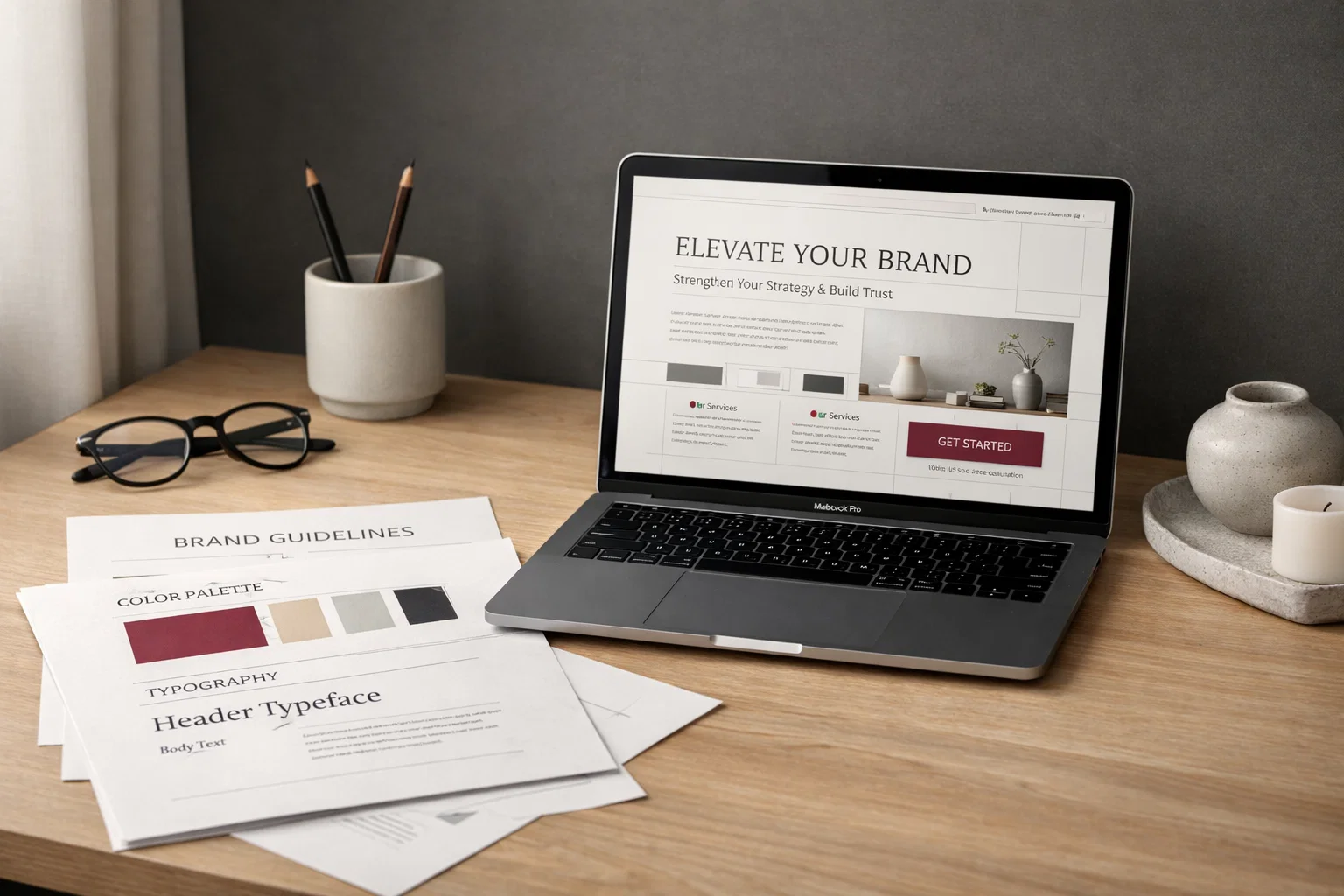

Design is not decoration.
It’s persuasion.
In today’s competitive digital landscape, customers decide within seconds whether to trust a brand. And those decisions are heavily influenced by visuals. Strategic graphic design for branding doesn’t just make your business look good — it builds credibility, shapes perception, and directly impacts conversions.
If you’re serious about growth, understanding the connection between design and conversions is essential. Let’s break down how thoughtful visual systems increase brand trust and drive measurable results.
First Impressions: The 7-Second Rule
Research shows users form first impressions in less than 7 seconds. Often, it’s even faster.
Before reading your content, customers evaluate:
- Logo professionalism
- Website layout clarity
- Typography consistency
- Color harmony
- Visual hierarchy
If your design feels cluttered, outdated, or inconsistent, trust drops immediately.
Strategic brand trust design ensures those first seconds work in your favor.
What Is Strategic Graphic Design?
Strategic graphic design aligns visuals with business goals.
It’s not about random creativity. It’s about:
- Intentional layout structure
- Clear messaging hierarchy
- Emotional color psychology
- Consistent brand systems
- Audience-focused design decisions
Every design element should serve a purpose.
When design supports strategy, conversion becomes natural.
The Psychology Behind Brand Trust Design
Trust is built visually before it’s built verbally.
Here’s how strategic design influences psychology:
1. Consistency Signals Reliability
When your logo, website, social media, and marketing materials all feel unified, customers perceive:
- Professionalism
- Organization
- Stability
Inconsistent visuals create doubt.
Consistency builds familiarity.
Familiarity builds trust.
2. Clean Design Reduces Cognitive Load
If users struggle to understand your layout, they leave.
Strategic design uses:
- White space
- Clear typography hierarchy
- Visual grouping
- Simplified navigation
This makes decisions easier.
And easier decisions mean higher conversions.
3. Premium Visuals Increase Perceived Value
Design directly influences pricing perception.
A refined visual identity allows businesses to:
- Charge higher prices
- Attract premium clients
- Compete confidently
Cheap design lowers perceived value — even if your service is excellent.
How Graphic Design Impacts Conversions
Let’s move beyond theory.
Here’s how design and conversions are directly connected.
1. Clear Visual Hierarchy Guides Action
Strategic layout guides the eye.
- Headlines grab attention
- Subtext builds interest
- CTA buttons stand out clearly
When hierarchy is intentional, users know exactly what to do next.
Confusion kills conversions.
Clarity increases them.
2. Strong Branding Builds Emotional Connection
People don’t buy products. They buy feelings.
A cohesive brand identity:
- Creates emotional resonance
- Builds recognition
- Enhances memorability
Over time, this connection leads to higher repeat engagement and stronger loyalty.
3. Trust Reduces Purchase Friction
If your website looks unprofessional, customers hesitate.
But if your design reflects:
- Confidence
- Stability
- Authority
The buying process feels safer.
And safety increases conversion rates.
Real-World Example: The Same Offer, Different Design
Imagine two companies offering the same service at the same price.
Company A:
- Generic logo
- Poor typography
- Cluttered layout
- Low-quality graphics
Company B:
- Strategic brand identity
- Clean layout
- Cohesive color system
- Refined visual hierarchy
Most customers will choose Company B — even if both deliver similar quality.
That’s the power of strategic design.
Key Elements of Graphic Design for Branding
To build trust and increase conversions, your design system should include:
1. A Strong Logo
Your logo is the face of your brand.
It should be:
- Simple
- Memorable
- Scalable
- Timeless
Professional logo design sets the tone for everything else.
2. Defined Color Psychology
Colors communicate emotion.
For example:
- Deep tones signal authority
- Neutral palettes reflect sophistication
- Accent colors guide action
Strategic use of color enhances brand perception and CTA visibility.
3. Typography System
Fonts influence personality.
Clean modern sans-serif typography often signals:
- Clarity
- Confidence
- Professionalism
Poor typography reduces readability — and trust.
4. Structured Layout Design
Grid systems, spacing, and alignment create visual order.
Order equals credibility.
When visuals feel structured, your business feels structured.
Why Growing Businesses Need Strategic Design
As businesses scale, expectations increase.
What worked during startup stage may not work at growth stage.
Growing brands need:
- Premium positioning
- Consistent brand guidelines
- Conversion-focused visuals
- Scalable digital assets
A structured approach to graphic design for branding ensures your business evolves visually alongside its growth.
If you’re building a cohesive visual system, explore structured branding services here:
👉 https://graphicsodio.com/services/
For complete design packages tailored to scaling businesses:
👉 https://graphicsodio.com/pricing/
Or request a tailored consultation:
👉 https://graphicsodio.com/get-a-quote/
The Long-Term ROI of Strategic Design
Strategic graphic design is not an expense — it’s an investment.
It delivers:
- Higher conversion rates
- Improved customer trust
- Stronger brand recall
- Increased perceived authority
- Better marketing performance
Design is often the silent reason behind successful brands.
Common Mistakes That Hurt Brand Trust
- Overusing trendy gradients
- Inconsistent social media visuals
- Poor mobile responsiveness
- Generic stock-heavy designs
- Weak CTA visibility
Avoiding these mistakes protects both trust and conversions.
Final Thoughts
Strategic design sits at the intersection of psychology and performance.
When visuals align with positioning, when layout supports clarity, and when branding reflects professionalism — trust increases.
And when trust increases, conversions follow.
If you want your business to grow sustainably, invest in design that performs, not just decorates.
Because in the modern marketplace, design is not optional — it’s strategic.