
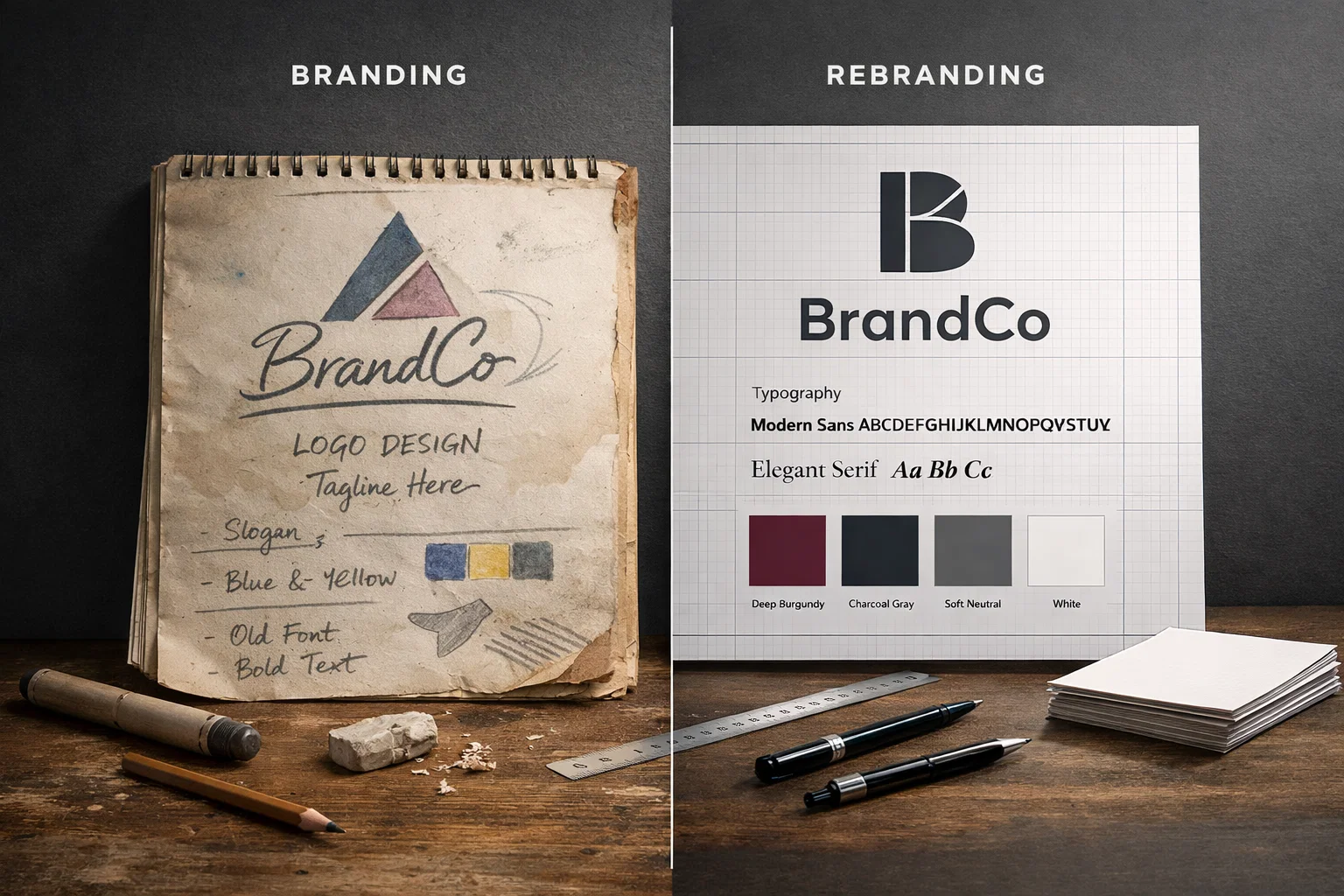

Branding is how your business introduces itself to the world.
Rebranding is how it reinvents that introduction.
For growing companies, understanding the difference between branding vs rebranding is critical. Many businesses confuse minor design updates with strategic repositioning — and that mistake can cost time, money, and momentum.
In this guide, we’ll break down what branding and rebranding really mean, when your business needs a visual upgrade, and how to approach a smart rebranding strategy that supports long-term growth.
What Is Branding?
Branding is the foundation of your business identity.
It includes:
- Logo design
- Color system
- Typography
- Visual style
- Messaging tone
- Brand positioning
- Audience targeting
But branding goes beyond visuals. It defines how customers perceive your business.
For startups and new businesses, branding is the first step toward credibility. A strategic brand identity helps you:
- Stand out in competitive markets
- Build customer trust
- Create visual consistency
- Support marketing campaigns
- Communicate value clearly
A strong branding system doesn’t just look good — it creates alignment between your business goals and customer perception.
What Is Rebranding?
Rebranding is a strategic transformation of your brand identity.
This can involve:
- Logo redesign
- Updated visual identity
- Refined positioning
- New messaging direction
- Target audience shift
- Complete brand system overhaul
Business rebranding is not about changing colors for fun. It’s about aligning your brand with who you are today — and where you’re going tomorrow.
Branding vs Rebranding: Key Differences
| Branding | Rebranding |
|---|---|
| Creating a brand from scratch | Transforming an existing brand |
| Used for new businesses | Used for evolving businesses |
| Establishes identity | Redefines identity |
| Focused on launch | Focused on growth or repositioning |
If your business is just starting, you need branding.
If your business has grown, shifted direction, or outgrown its image — you may need rebranding.
Signs Your Business Needs Rebranding
Not every company needs a rebrand. But growing businesses often reach a stage where their original identity no longer fits.
Here are the major signals.
1. Your Brand Looks Outdated
Design trends evolve. If your logo, typography, or visual style feels stuck in the past, it can affect credibility.
Customers subconsciously judge professionalism based on visuals.
An outdated look can signal:
- Lack of innovation
- Low-quality service
- Stagnation
Modernizing your identity through a refined rebranding strategy can instantly elevate perception.
2. Your Business Has Outgrown Its Original Audience
Maybe you started small. Maybe you targeted local clients. But now you serve global customers or larger businesses.
If your visuals still reflect your “startup phase,” you may need a brand evolution.
Business growth requires brand maturity.
3. Your Positioning Has Changed
Perhaps you:
- Shifted from general services to premium offerings
- Expanded into new industries
- Pivoted your niche
- Increased pricing
Your brand must reflect that shift.
If perception doesn’t match positioning, customers get confused.
4. You’re Struggling With Consistency
If your brand looks different across platforms — website, social media, packaging, marketing materials — you likely lack a structured brand system.
Rebranding can bring clarity through:
- Defined brand guidelines
- Consistent typography
- Unified color palette
- Scalable visual assets
Consistency builds trust.
5. Your Logo Was Never Strategic
Many businesses launch quickly with:
- DIY logos
- Template-based designs
- Cheap freelancer marks
That may work early on. But as your brand grows, the cracks begin to show.
A strategic rebrand strengthens long-term value.
When You Should NOT Rebrand
Rebranding isn’t always the solution.
Avoid rebranding if:
- Your brand already has strong recognition
- The issue is marketing, not identity
- Sales decline due to product issues
- You’re rebranding just because you’re bored
Rebranding without strategy can damage trust and brand equity.
Types of Rebranding
Not all rebrands are dramatic.
1. Partial Rebrand
Small updates:
- Logo refinement
- Typography modernization
- Color adjustments
Best for brands that need evolution, not reinvention.
2. Full Rebrand
Complete transformation:
- New logo
- New visual system
- New positioning
- Updated messaging
Best for companies undergoing major shifts.
What Makes a Successful Rebranding Strategy?
A powerful rebranding strategy follows structure, not impulse.
Here’s what it includes:
Strategic Research
- Market positioning analysis
- Competitor research
- Audience insights
- Internal brand audit
Visual Identity System
- Logo redesign
- Color psychology refinement
- Typography hierarchy
- Visual guidelines
Brand Messaging Alignment
- Tone of voice
- Tagline
- Core messaging pillars
Implementation Plan
- Website update
- Social media refresh
- Marketing materials redesign
- Internal team alignment
A rebrand is successful only when executed consistently.
The ROI of Business Rebranding
Many business owners hesitate because of cost. But the real question is:
What is the cost of staying outdated?
Rebranding can:
- Increase perceived value
- Attract higher-paying clients
- Improve brand trust
- Boost engagement
- Strengthen competitive edge
In saturated markets, differentiation is everything.
Real Growth Requires Visual Alignment
If your business has evolved but your brand hasn’t — you’re operating with friction.
Your visuals should reflect:
- Confidence
- Professionalism
- Strategic thinking
- Market authority
Growing brands need scalable identity systems — not patchwork design.
If you’re evaluating whether it’s time for a visual shift, exploring structured branding solutions can clarify the next step:
👉 https://graphicsodio.com/services/
For growth-ready branding packages:
👉 https://graphicsodio.com/pricing/
Or request a tailored consultation:
👉 https://graphicsodio.com/get-a-quote/
Final Thoughts: Branding vs Rebranding
Branding builds your identity.
Rebranding refines your evolution.
If you’re launching, focus on strategic branding.
If you’re scaling, repositioning, or modernizing — rebranding may be the smarter move.
The key is alignment.
When your brand identity matches your business maturity, growth becomes smoother, credibility strengthens, and marketing becomes more effective.
A thoughtful rebranding strategy isn’t about changing how you look — it’s about transforming how you’re perceived.
And perception drives success.