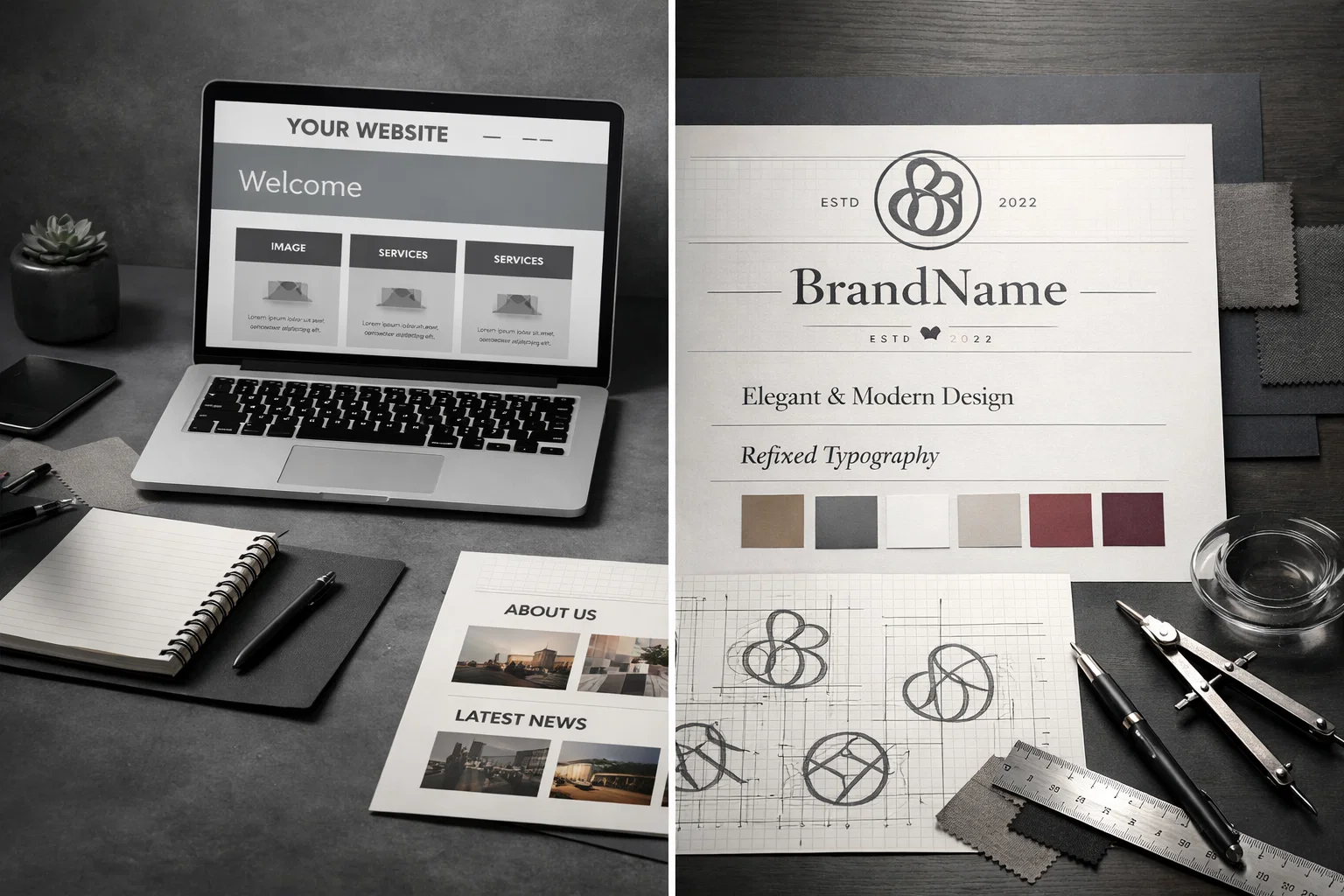

In the early stages of a business, templates feel convenient.
They’re fast. Affordable. Accessible.
But as a brand grows, one critical question emerges:
Is convenience costing you credibility?
The debate around template vs custom design becomes especially important when your business is scaling. While templates may work for hobby projects or short-term campaigns, serious brands need something more strategic.
In this guide, we’ll break down why custom graphic design is a smarter long-term branding investment — and how it directly impacts perception, positioning, and profitability.
The Real Difference: Template vs Custom Design
Let’s start with clarity.
Template Design:
- Pre-made layouts
- Limited customization
- Shared design structures
- Fast and low-cost
- Minimal strategy
Custom Graphic Design:
- Created from scratch
- Tailored to brand positioning
- Built around audience psychology
- Strategically structured
- Unique and exclusive
Templates are shortcuts.
Custom design is infrastructure.
Growing brands need infrastructure.
1️⃣ Templates Limit Brand Differentiation
In competitive markets, standing out is everything.
Templates are used by thousands — sometimes millions — of other businesses.
That means:
- Similar layouts
- Familiar typography
- Recycled visual styles
Customers may not consciously notice, but subconsciously, generic design feels generic.
Custom graphic design, on the other hand, builds a unique visual fingerprint.
It ensures your brand looks — and feels — distinct.
Differentiation builds authority.
2️⃣ Templates Can Undermine Premium Positioning
Perception influences pricing.
If your brand looks template-based, customers may assume:
- Lower service quality
- Limited expertise
- Budget positioning
Premium brands rarely use obvious templates.
A refined visual identity communicates:
- Professionalism
- Structure
- Strategic thinking
That perception allows higher pricing power.
3️⃣ Custom Design Aligns With Brand Strategy
Templates focus on aesthetics.
Custom design focuses on strategy.
A strategic design process considers:
- Brand mission
- Target audience
- Competitive landscape
- Growth goals
- Emotional positioning
When design aligns with business strategy, everything feels cohesive.
Templates cannot deliver that level of depth.
4️⃣ Scalability Matters for Growing Businesses
As businesses grow, design needs evolve.
You may expand into:
- New services
- New markets
- New platforms
- International audiences
Template systems often break under complexity.
Custom graphic design, however, creates:
- Brand guidelines
- Flexible design systems
- Structured typography hierarchy
- Scalable visual assets
Scalability protects long-term consistency.
5️⃣ Templates Restrict Creative Freedom
With templates, you’re working within constraints.
You can change colors.
Maybe fonts.
Maybe spacing.
But structure remains fixed.
Custom design removes limitations.
It allows:
- Unique compositions
- Creative layout innovation
- Tailored iconography
- Custom typography adjustments
Creative freedom strengthens brand originality.
6️⃣ SEO & UX Performance Benefits
Many template-heavy websites suffer from:
- Bloated code
- Slow load speeds
- Generic user experience
- Poor conversion hierarchy
Custom design allows optimization from the ground up.
Better structure improves:
- User engagement
- Navigation clarity
- Conversion rates
- SEO performance
Strategic UX is rarely template-based.
7️⃣ Long-Term Branding Investment
A strong brand identity lasts years.
When evaluating branding investment, consider:
- Cost of redesigning later
- Brand inconsistency damage
- Lost trust opportunities
- Missed premium positioning
Templates may save money today — but often cost more tomorrow.
Custom design builds long-term equity.
8️⃣ Emotional Impact & Trust
Customers connect emotionally with brands.
Generic visuals rarely evoke emotion.
Strategic custom design creates:
- Memorable brand marks
- Thoughtful color psychology
- Structured visual storytelling
- Cohesive digital presence
Emotion builds loyalty.
Loyalty builds growth.
9️⃣ Competitive Advantage
If your competitors use templates and you invest in custom design, you instantly stand out.
In saturated industries, subtle differences matter.
Clean spacing.
Refined typography.
Intentional layouts.
These details separate amateurs from professionals.
When Are Templates Acceptable?
Templates may work if:
- You’re testing an idea
- Running a short-term campaign
- Operating at hobby scale
- Building an internal draft
But for serious growth?
Templates are temporary solutions.
Growing brands require strategic structure.
Signs It’s Time to Upgrade to Custom Design
- Your brand feels generic
- You’re increasing pricing
- Competitors look more refined
- You’re expanding services
- Your visual identity lacks consistency
If any of these apply, custom graphic design is no longer optional — it’s necessary.
The ROI of Custom Graphic Design
Investing in custom design can deliver:
- Higher perceived value
- Improved conversion rates
- Stronger brand recall
- Increased client trust
- Better marketing alignment
Design influences every customer touchpoint.
From website to packaging to social media — consistency drives authority.
If you’re ready to build a scalable visual system tailored to your growth, explore structured branding solutions here:
👉 https://graphicsodio.com/services/
For premium design packages:
👉 https://graphicsodio.com/pricing/
Or request a custom consultation:
👉 https://graphicsodio.com/get-a-quote/
Final Thoughts
Templates are shortcuts.
Custom design is strategy.
For growing brands, the decision between template vs custom design is not just about budget — it’s about positioning.
If your goal is long-term credibility, premium perception, and scalable growth, investing in custom graphic design is one of the smartest branding decisions you can make.
Because in competitive markets, looking different isn’t optional — it’s essential.